Development of Predictive Models and Quantitative Risk Assessment of Pathogens in Green Vegetables Produced by Local Farmers in Indonesia Under Climate Change Scenarios: A Case Study in Central Java
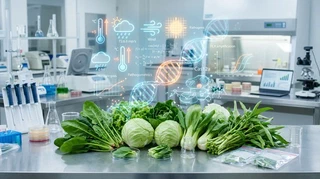
Project Overview
This research project aims to evaluate and mitigate the microbial safety risks of green vegetables in Indonesia by integrating rapid pathogen detection, predictive modeling, cross-contamination analysis, and Quantitative Microbial Risk Assessment (QMRA) in response to climate change challenges.
For detailed information, please refer to the original proposal document: “Proposal - Microbiological safety of vegetables (Ind)_rev1.docx”.
- Principal Investigator: Nodali Ndraha, Ph.D.
- Duration: 3 Years (2025 – 2027)
- Funding Agency: Research and Innovation for Advanced Indonesia (RIIM) Competition - BRIN
- Total Funding Amount: IDR 819,500,000
Research Team
- Principal Investigator: Nodali Ndraha, Ph.D. (Research Center for Food Technology and Processing, BRIN)
- Members (BRIN):
- Siska Aditya, Ph.D.
- Dr. Ema Damayanti
- Lino Garda Denaro, Ph.D.
- Nikmatul Hidayah, M.Si.
- Dr. drh. Widodo Suwito
- Radestya Triwibowo, Ph.D.
- External Collaborators:
- Dian Anggraini Suroto, Ph.D. (Universitas Gadjah Mada - UGM, Indonesia)
- Fenny Crista Anastasia Panjaitan, M.Sc. (Politeknik Kelautan dan Perikanan Jembrana - PKPJ, Indonesia)
- Prof. Hsin-I Hsiao, Ph.D. (National Taiwan Ocean University - NTOU, Taiwan)
Project Summary
The global and national increase in the consumption of fresh vegetables has been accompanied by a high frequency of foodborne illness outbreaks. Pathogens such as Salmonella enterica, Listeria monocytogenes, and Staphylococcus aureus pose serious health risks. Furthermore, climate change—characterized by shifting temperatures, precipitation patterns, and extreme weather events—adds complexity to food safety by potentially accelerating the spread and growth of these pathogens.
Focused on green vegetables (spinach, water spinach, cabbage, and mustard greens) cultivated in Central Java, Indonesia, this comprehensive three-year study is divided into several key phases:
- Advanced Pathogen Detection (Year 1): Developing sensitive, specific, and rapid detection methods using a multiplex PCR approach combined with the Most Probable Number (MPN) method to simultaneously detect and quantify target pathogens directly from farm samples.
- Predictive Modeling (Year 2): Utilizing machine learning algorithms (such as Random Forest and Elastic Net) to build predictive models. These models will combine local climatological data (temperature, humidity, precipitation) with pathogen detection data to forecast the occurrence and concentration of pathogens in vegetables and their cultivation environments.
- Cross-Contamination & Risk Assessment (Year 3): Evaluating the pathogen transfer ratio from food-handling surfaces to vegetables based on local processing behaviors. Ultimately, all findings will be integrated into a robust Quantitative Microbial Risk Assessment (QMRA) model to estimate the health risks associated with vegetable consumption under various future climate change scenarios (IPCC SSPs) and to evaluate potential mitigation strategies.
This research will provide a better understanding of how climate change impacts microbial food safety and will deliver science-based tools (like early warning systems) to help the industry and food safety authorities protect public health.
